
Cambodia E-Visa Update 2026: What Changed and What You Need to Know
The latest Cambodia e-visa update covers lower fees, the new e-Arrival Card, digital entry confirmation, and holiday closures. Check what changed before you apply.
The most recent Cambodia e-visa update confirms three practical changes for anyone planning a trip: the tourist and business e-visa fees dropped in 2025 and stayed lower through 2026, air arrivals now receive a digital entry confirmation instead of an ink stamp, and a separate e-Arrival Card must be filed online before you fly. None of these changes affect who is eligible. Most nationalities can still apply for a Cambodia e-visa online and receive an approval letter by email.
The update also touches processing dates and entry points. Two Cambodian public holidays close e-visa processing later this year, a new airport now accepts e-visa arrivals into Phnom Penh, and a time-limited exemption applies to Chinese citizens. Below is a breakdown of each change, followed by the dates and entry points you need before you submit an application.
Cambodia e-visa update in brief:
| Item | Current status (2026) |
|---|---|
| Tourist e-visa (T) fee | USD 30 |
| Business e-visa (E) fee | USD 35 |
| Stay length | 30 days, single entry |
| Passport stamp on arrival | Replaced by email confirmation for air arrivals |
| e-Arrival Card | Mandatory, submit within 7 days before your flight |
| New entry point | Techo International Airport (KTI), Phnom Penh |
| Processing closures | September 24, and October 13-15, 2026 |
| Official site | evisa.gov.kh |
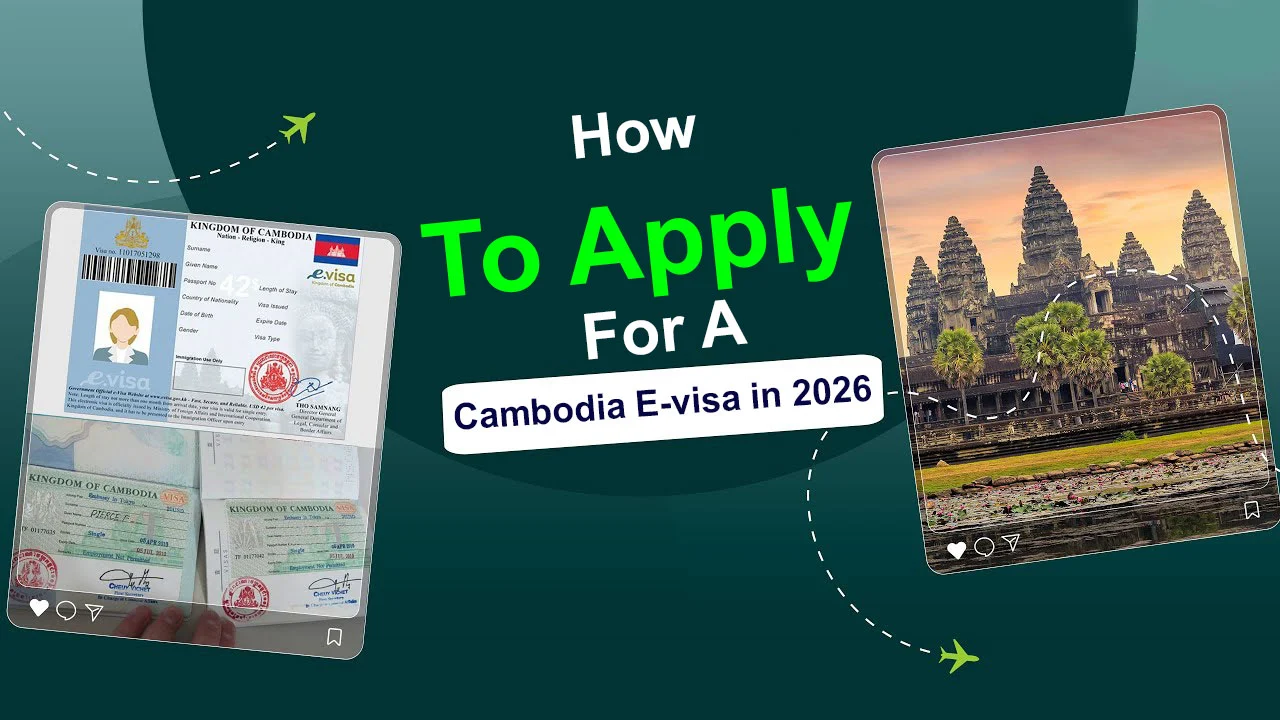
What is the latest Cambodia e-visa update?
The latest Cambodia e-visa update is a resumption notice: eVisa applications are open again to citizens of all countries, for a 30-day single entry for tourism purposes. Transit passengers who depart on the same aircraft they arrived on at Phnom Penh airport are exempt from the visa requirement altogether.
This matters because eVisa access has not always applied evenly to every nationality. The 2026 notice removes that ambiguity: if you hold a passport from any country, you can apply for the tourist e-visa online rather than route through an embassy. Business travelers follow the same online channel, though the business e-visa carries a higher fee and can call for supporting documents from the inviting company.
The sections below cover the fee, the entry rules, and the dates you need to plan around. If you already applied under an older fee or process, the current terms in this update supersede anything you may have read on a travel forum from before 2025.
Has the Cambodia e-visa fee changed in 2026?
Yes. The tourist e-visa (T) fee dropped from USD 36 to USD 30, and the business e-visa (E) fee dropped from USD 42 to USD 35. Both changes took effect on January 1, 2025, and the lower fees are still current in 2026.
| Visa type | Old fee | New fee (2026) | Typical use |
|---|---|---|---|
| e-Visa T | USD 36 | USD 30 | Tourism, single entry, 30 days |
| e-Visa E | USD 42 | USD 35 | Business travel, may require support documents |
Note: these figures are the government fee charged on the official portal. A third-party application assistance service may charge an additional service fee on top of the government amount.
Do you still get a passport stamp on arrival?
No, not automatically. Air arrivals now receive their entry confirmation by email rather than an ink stamp in the passport. Immigration processes the entry electronically, and you present the printed or digital approval alongside your passport at the counter.
If a physical record matters to you, for a residency permit renewal or a future visa application, keep the email confirmation saved and printed. Some land border checkpoints may still stamp on request, so ask the officer directly if you need a physical mark. Otherwise, treat the email confirmation as your proof of entry.
This shift mirrors a broader move toward digital entry records across the region. It also means your phone battery and internet access matter more than before. Download and save a PDF copy of the confirmation before you board, rather than relying on an email you can only open with a live connection at the airport.
What is the Cambodia e-Arrival Card and when do you submit it?
The Cambodia e-Arrival Card is a separate online form, distinct from the e-visa, and it must be submitted within 7 days before your flight. It replaces the paper immigration, health, and customs forms that used to be handed out on the plane.
- Complete the e-Arrival Card on the official portal after your e-visa is approved.
- Submit it no earlier than 7 days and no later than your departure time.
- Save the confirmation and present it with your e-visa approval letter and passport on arrival.
Note: the e-Arrival Card does not replace the e-visa application. You need both if you are flying in and your nationality requires a visa.
Which entry points accept the Cambodia e-visa in 2026?
The e-visa is currently valid at five entry points: Techo International Airport (KTI), Siem Reap Angkor International Airport (SAI), Sihanoukville International Airport (KOS), Bavet Land Checkpoint, and Tropaeng Kreal Land Checkpoint. Check that your arrival point is on this list before you book a flight or plan a land crossing, since not every airport or checkpoint accepts the online visa.
| Entry point | Type | Location |
|---|---|---|
| Techo International Airport (KTI) | Air | Phnom Penh |
| Siem Reap Angkor International Airport (SAI) | Air | Siem Reap |
| Sihanoukville International Airport (KOS) | Air | Sihanoukville |
| Bavet Land Checkpoint | Land | Border with Vietnam |
| Tropaeng Kreal Land Checkpoint | Land | Border with Laos |
If your trip enters through a different land border or a smaller regional airport, confirm with the carrier or your guaranteeing agency first. Arriving at a checkpoint outside this list with only an e-visa approval letter can mean the officer asks you to apply for a visa on arrival instead.
What changed with Techo International Airport?
Techo International Airport (KTI) is Phnom Penh's newer airport and has been operational since September 2025. If your itinerary shows a flight landing in Phnom Penh, confirm with your airline whether it lands at KTI, since older travel guides may still reference the previous Phnom Penh airport code.
Are there nationality-specific exemptions right now?
One applies at the time of writing: a 14-day visa exemption trial for Chinese citizens, running from June 15 to October 15, 2026. Within that window, Chinese passport holders can enter Cambodia for up to 14 days without applying for a visa in advance.
Outside that trial and outside the standing visa-free list for several ASEAN neighbors, most other nationalities still need either the e-visa, a visa on arrival, or an embassy-issued visa depending on the port of entry.
The exemption trial is time-boxed on purpose. If you are booking travel for a Chinese passport holder after October 15, 2026, plan for the standard e-visa process rather than assuming the exemption still applies. Trial programs like this one are usually reviewed near the end date, so check the official portal again close to your travel date if it falls near that boundary.
When will e-visa processing be closed for holidays?
Processing pauses on two public holidays later this year: Constitution Day on September 24, and Pchum Ben Day across October 13-15. During these windows, e-visa applications will not be processed, so travelers should plan their travel accordingly to avoid any inconvenience.
How do you avoid delays around a holiday closure?
- Submit your e-visa application at least 5-7 working days before a planned holiday closure.
- Keep a saved copy of your approval letter once it arrives, in case you need to show it before your printed copy is ready.
- Avoid scheduling a same-day or urgent application request during the closure dates themselves, since no processing occurs on those days.
- If your flight lands during or right after a holiday closure, apply the week before rather than waiting until the days immediately surrounding the holiday.
How do you apply under the current process?
The application steps have not changed even though the fee and the entry confirmation have. You still apply online, upload your documents, pay by card, and wait for the approval letter by email.
- Complete the online application form with your passport details and travel dates.
- Upload a scanned copy of your passport bio page and a passport-sized photo (4x6cm, white background, no glasses).
- Pay the visa fee by credit or debit card and wait for processing, typically 3-5 working days.
- Print the approval letter, or save it on your phone, and present it with your passport and e-Arrival Card at the border.
Note: urgent or same-day processing may be offered by assisted application services for an added fee. The free government portal itself does not guarantee same-day turnaround.
How do you avoid fraudulent Cambodia e-visa sites?
Several copycat websites mimic the official Cambodia e-visa portal and charge additional, undisclosed fees, or collect passport data without a clear purpose. The real government application runs through evisa.gov.kh, and the separate e-Arrival Card runs through arrival.gov.kh.
A few habits keep your application and your data safe regardless of which site you use:
- Check that the URL matches the official domain before entering passport details or card information.
- Avoid sites that ask for a payment before showing you the visa fee amount in writing.
- Keep a copy of your payment receipt separate from your approval letter, in case a dispute comes up later.
If you would rather not manage the application yourself, cambodia-visa.com offers an assisted service that files the same government application on your behalf and checks your documents before submission. This is a paid convenience service, not the free government portal itself, so compare the total cost before you choose either path. For the full document checklist before you start, see the Cambodia visa requirements guide or the breakdown of e-visa fees.
Frequently asked questions
1. What is the latest Cambodia e-visa update for 2026?
The e-visa fee dropped to USD 30 for tourism and USD 35 for business, air arrivals now get an email confirmation instead of a passport stamp, and a separate e-Arrival Card is mandatory within 7 days before your flight.
2. How much does the Cambodia e-visa cost now?
The tourist e-visa (T) costs USD 30, and the business e-visa (E) costs USD 35, both for a 30-day single entry.
3. Do air arrivals still get a passport stamp in Cambodia?
Not automatically. Air arrivals receive an email confirmation of entry instead of an ink stamp, though some land checkpoints may still stamp on request.
4. What is the Cambodia e-Arrival Card?
It is a separate online form for immigration, health, and customs details, submitted within 7 days before your flight, in addition to the e-visa itself.
5. Is there a visa exemption for Chinese citizens in 2026?
Yes, a 14-day visa exemption trial for Chinese citizens runs from June 15 to October 15, 2026.
6. When is Cambodia e-visa processing closed for holidays?
Processing is closed on September 24 for Constitution Day, and October 13-15 for Pchum Ben Day.
Posted Jul. 06, 2026 19:39